



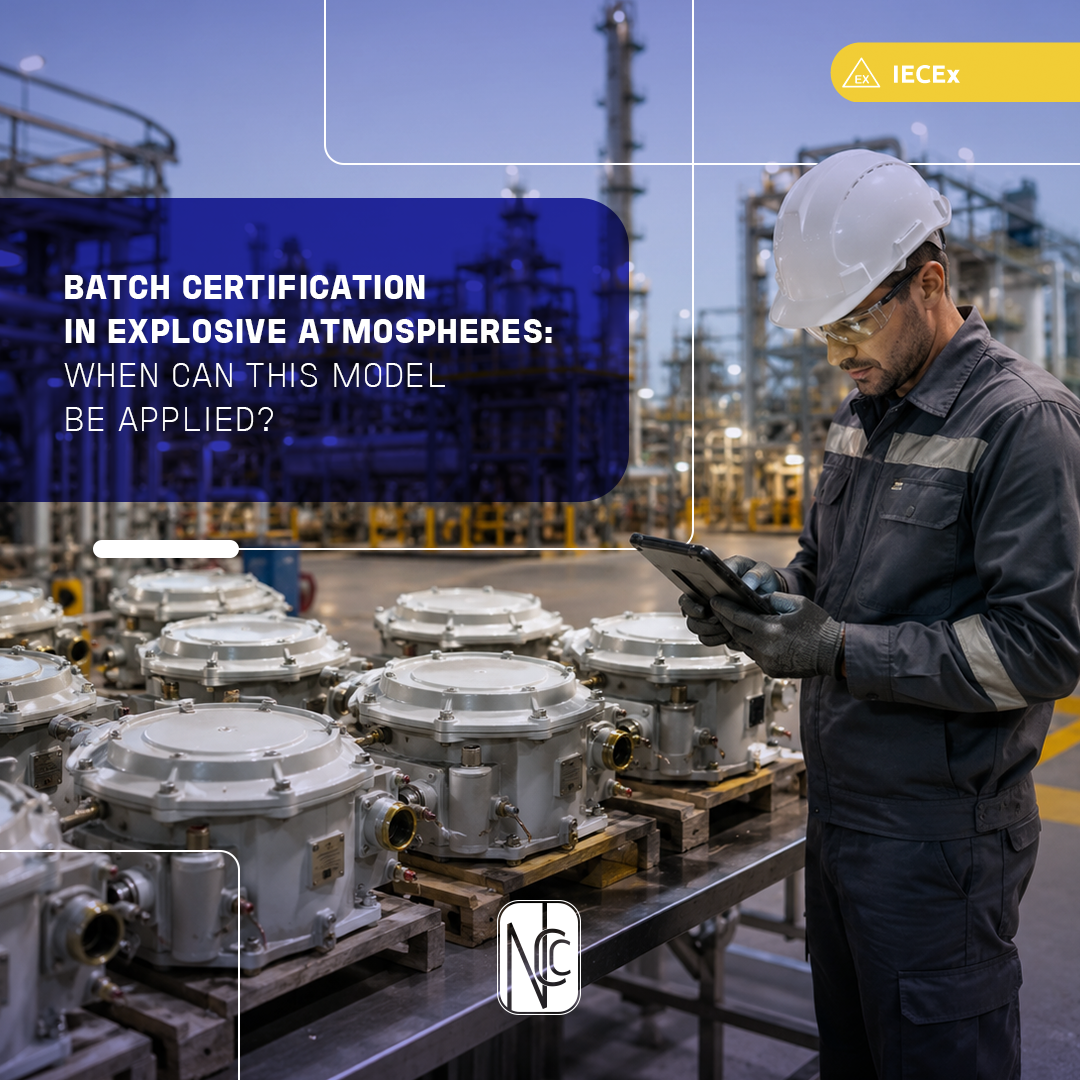
In the certification of Ex equipment (equipment intended for use in explosive atmospheres), the certification model is intrinsically linked to the specific batch of equipment you wish to certify. This means that each batch is evaluated individually, ensuring that all items comply with the strict safety standards required for operation in environments where flammable gases and vapors may be present.
How Does Sampling Work?
One of the most important aspects of this model is that certification testing is carried out using a representative sample. Tests are conducted on 6% of the total batch, with at least one unit being tested regardless of the batch size.
In addition to practical testing, the descriptive documentation for each Ex equipment item is also thoroughly evaluated. This documentation includes technical specifications, drawings, component certificates, and other critical information demonstrating that the equipment complies with the applicable standards.
Routine Tests: The Next Step
When applicable to the equipment’s type of protection, the remainder of the batch must undergo routine tests in accordance with the relevant technical standard. These additional tests ensure that all items in the batch maintain the same quality and safety standards identified during the initial sampling process.
Routine tests are essential to verify that the manufacturing process remains consistent and that no deviations have occurred that could compromise operational safety.
If all items pass the certification and routine tests, and all other regulatory requirements are met, the batch is granted certification. This is an important milestone confirming that the equipment is suitable for safe operation in explosive atmospheres.
This lot certification model provides an important balance: it ensures safety through rigorous testing while maintaining the economic feasibility of production.